Sorry for What My Face Said Embroidery Review
First Impressions and Design Personality
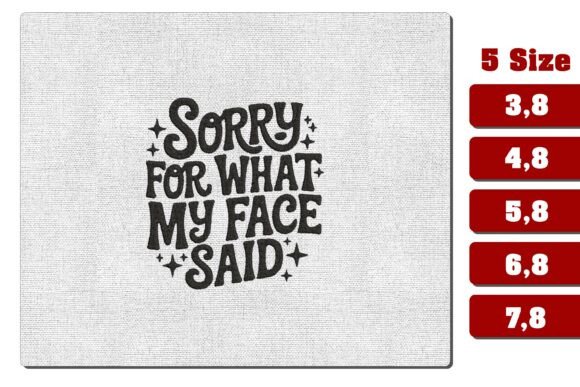
When I first opened the Sorry for What My Face Said Embroidery file, it was clear this is a design with character. The retro font immediately sets a nostalgic tone while adding a touch of modern humor. As an experienced embroidery designer, I appreciate how the layout balances wit and simplicity—it doesn’t overwhelm but makes a statement. The phrase “Sorry for What My Face Said” is both relatable and clever, making it perfect for family quotes that resonate across generations. Its playful yet slightly cheeky message feels like the kind of thing you’d say to your best friend or post on social media after a long day. This personality translates well into machine embroidery designs, especially when placed on cozy sweatshirts and hoodies meant for everyday wear.Design Aesthetics and Stitching Style
One of the standout features of this embroidery file is its stitching style. The retro font gives it a vintage flair, while the clean lines and minimal detailing keep it from looking too busy. It’s not over-embellished, which is great for maintaining a premium feel. The design has a good balance of coverage and breathing room, which helps reduce stitch density issues. This embroidery design would work particularly well on neutral sweatshirts. The contrast between the text and the fabric allows the design to pop without needing bold colors. On dark fabrics, using white or light-colored threads can create a dramatic effect that feels both casual and cute. For pastel tones, choosing a thread color with a bit of depth—like navy or charcoal—will help the design remain legible and visually appealing. If you're working with oversized hoodies, consider placing the design off-center or along the sleeve as an accent. It adds a subtle layer of interest without competing with the relaxed silhouette. For cozy seasonal apparel, such as winter hoodies or springtime loungewear, this design brings a sense of warmth and familiarity that customers will love.Placement Options and Sweatshirt Compatibility
As a boutique brand preparing a limited sweatshirt drop, placement is everything. The Sorry for What My Face Said Embroidery reads well in several positions:- Chest Placement: Centered on the chest at around 3–4 inches tall works beautifully. It’s visible enough for lifestyle product photography but still feels unobtrusive.
- Sleeve Accents: Smaller versions on the sleeves add a fun twist. Ideal for sweatshirt embroidery that leans towards the feminine and decorative.
- Back Designs: For a bolder look, use the full-size version centered on the back. It becomes a conversation starter and enhances visual recognition for your brand.
Practical Design Considerations
Every handmade product needs to be evaluated beyond aesthetics. Here are some key practical considerations for using Sorry for What My Face Said Embroidery on real merchandise:Thread Color Contrast: The design benefits from high contrast. If your base fabric is dark, go with lighter threads. Conversely, if the fabric is light, darker threads will make the text stand out clearly.
Stitch Density: The design handles medium to low stitch density well, which is ideal for cotton-blend sweatshirts. Too much density could lead to puckering, so test on a few swatches before bulk production.
Fabric Thickness: Works best on thicker, heavier-weight sweatshirts. Thinner materials might cause the design to lose definition unless stabilized properly.
Stabilizer Choice: A tear-away or cut-away stabilizer is recommended depending on the fabric. For commercial embroidery purposes, testing different stabilizers will ensure the best finish and durability.
Small-Size Readability: While the main text remains readable even at smaller sizes, the retro font might require careful scaling to maintain clarity. Avoid reducing it below 2 inches in height for optimal readability on small shop products.
Hoop Placement: Due to the horizontal nature of the text, hoop placement should be considered carefully. Make sure there's enough space above and below the design to avoid distortion during tension adjustments.
Washing Durability: With proper stabilizing and quality threads, the design should hold up well through multiple washes. However, always recommend cold water washing and avoiding dryers for handmade product care.